September 18, 2025
Read more ...
September 15, 2025
Read more ...
September 8, 2025
The Financial Reporting Council of Nigeria (FRC) reminds Small and Medium-Sized Practitioners (SMPs) of the 60-day grace period granted to regularise their registration and ensure compliance with the Council’s rules. The grace period expires on 25th September 2025.
Non-compliance will attract sanctions in line with the Council’s operational guidelines.
Read more ...
July 28, 2025
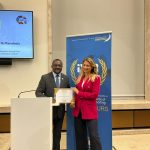
The Financial Reporting Council (FRC) of Nigeria has launched the first edition of its journal, the FRC Journal of Financial Reporting and Corporate Governance. The journal was officially launched on 25 July 2025 at its Lagos office with a ceremonial presentation to the Executive Secretary/CEO of FRC, Dr Rabiu Olowo, by the Editor-in-Chief, Prof Suleiman A. S. Aruwa, and other members of the Editorial Board.
The presentation ceremony was attended by distinguished members of the Editorial Board, including Professor Austin Nweze (Enugu State University of Science and Technology), Professor Sehilat Abike Bolarinwa (Lagos State University), Dr. Musa Abdullahi Musa (Nasarawa State University), and Dr. Abubakar Razaq Garba (FRC). Also present were members of FRC’s management team, as well as the Chief Executive Officer of the Financial Reporting Oversight Board, Gambia, Suleiman Fode, who was visiting on a study tour.
The journal aims to deepen academic scholarship, stimulate policy discussion, and improve professional practice across financial reporting, auditing, assurance, valuation, and corporate governance both within Nigeria and internationally. It is envisioned as a scholarly repository and a strategic platform that promotes transparency, accountability, ethical leadership, and institutional integrity through evidence-based research and thought leadership. This initiative aligns with the Council’s mandate to oversee and enhance education, research, and training in these vital fields.
In his opening remarks, Prof. Aruwa reflected on the significance of the journal and the Editorial Board’s dedication. According to him, “Since our appointment in March 2025, the Board has worked tirelessly to establish governance instruments, editorial policies, peer review guidelines, and submission processes to ensure the journal’s quality and integrity. We received 28 submissions from Nigerian universities; after a rigorous review, 10 articles were accepted and edited for publication, with others undergoing minor revisions. The maiden edition, Volume 1, Number 1, dated June 2025, has been validated for publication today. We have also begun receiving submissions for the second edition scheduled for December 2025.”
He further highlighted plans to enhance the journal’s reach and quality, including the development of an online Journal Management System and the inclusion of associate editors from countries such as Mozambique, Turkey, Ghana, and New Zealand to foster global collaboration and diversify the editorial board. The journal has also applied for ISSN registration for both print and online editions.
Responding on behalf of the FRC, Dr. Rabiu Olowo commended the Editorial Board’s efforts. He stated, “This publication aligns perfectly with our vision and core mandate to promote research, training, and excellence in financial reporting and corporate governance. Over the past years, we have aspired to establish such a platform, and thanks to your commitment, it has become a reality. We pledge our ongoing support to ensure this journal attains international standards and broad accessibility. We encourage further strengthening of the peer review process and welcome the proposal to expand the editorial board with associate editors from recognized institutions globally. We are also considering making the journal openly accessible to remove barriers to quality research.”
The maiden edition includes insightful research articles on earnings quality in agricultural firms, environmental, social, and governance (ESG) disclosures and their influence on investment decisions, the impact of fair value hierarchy on accounting quality in commercial banks, board attributes and human capital disclosure, economic aspects of corporate social responsibility, enterprise risk management across Nigeria, Ghana, and South Africa, and green accounting practices in Nigeria’s oil and gas sector.
The launch of The FRC Journal of Financial Reporting and Corporate Governance marks a milestone in Nigeria’s efforts to enhance the quality and impact of financial reporting and governance research, supporting the country’s broader economic development and institutional transparency goals.
The journal can be accessed via the Council’s website at https://shorturl.at/VRV60
For further information or to contribute to upcoming editions, stakeholders are encouraged to contact the Editorial Board via journal@frcnigeria.gov.ng
Read more ...
February 3, 2026
Dr. Olowo Advocates for Resilient and Values-Driven Leadership at Nigeria Leadership Dialogue
The Executive Secretary/CEO of the Financial Reporting Council of Nigeria (FRC), Dr. Rabiu Olowo, joined other distinguished leaders at the maiden edition of the Nigeria Leadership Dialogue, convened by the Africa Leadership Initiative West Africa (ALIWA), to address the theme “Building Resilient Leadership for the 21st Century.” The event, held under the broader banner of “Reimagining Leadership in a Changing World,” brought together thought leaders, policymakers, corporate executives, and advocates to explore innovative approaches to leadership in an era defined by volatility, uncertainty, complexity, and ambiguity.
Insights from Dr. Olowo: Leadership in Action
During the session, Dr. Olowo shared valuable insights drawn from his tenure as the Executive Secretary/CEO of the FRC. Reflecting on his experiences and the challenges faced since taking office, he emphasized the importance of resilient leadership in navigating complexity and driving transformation.
He underscored the need for empowering leadership at every level, stating, “Every desk must have a leader.” By fostering leadership across all roles within an organization, Dr. Olowo argued that teams can achieve greater alignment, accountability, and innovation.
Highlighting the sacrifices leaders often make for the well-being of their teams, Dr. Olowo explained how prioritizing the needs of followers ultimately earns leaders not just admiration but also the respect and support of their teams. According to him, a leader’s ability to build trust, demonstrate empathy, and inspire action is critical to sustaining institutional relevance and growth.
A Timely Dialogue for a Changing World
The Nigeria Leadership Dialogue was convened at a time when the country, like the rest of the world, is grappling with rapid technological disruption, shifting workforce demographics, heightened demands for accountability, and persistent governance challenges. Themed “Reimagining Leadership in a Changing World,” the event sought to define the traits and strategies required for 21st-century leadership.
The dialogue featured two high-level panel discussions, interactive sessions, and cross-sector networking opportunities. Dr. Olowo was a key panelist in the session on “Building Resilient Leadership for the 21st Century.” Alongside prominent leaders such as Ms. Hadiza Bala-Usman (Special Advisor to the President on Policy Coordination), Dr. Demola Sogunle (former CEO of Stanbic IBTC Holdings), Ms. Yemi Adamolekun (Executive Director, Enough is Enough Nigeria), and Mr. Abubakar Suleiman (CEO, Sterling Bank), Dr. Olowo explored critical aspects of modern leadership.
Core Themes of the Panel Discussion
The panel adopted a reflective yet practical approach, focusing on how leaders can navigate complexity and sustain performance while staying true to their values. Key themes included:
- Inclusive Leadership: Recognizing the strategic importance of gender and intergenerational diversity in fostering innovation and opportunity creation.
- Building Workplace Resilience: Ensuring steady growth and institutional relevance by creating structures that withstand disruption.
- Public Sector Leadership: Managing reforms, achieving results, and overcoming resistance in government systems.
- Leadership Values: Highlighting the importance of organizational values in navigating uncharted paths while maintaining a triple bottom-line focus (people, planet, and profit).
- Activism and Advocacy: Leveraging influence beyond formal authority to drive sustainable change.
Dr. Olowo’s contributions emphasized the values-driven foundation of leadership in the public sector and how aligning leadership with purpose can enhance institutional trust and impact.
A Call to Action for Leaders
As the session concluded, participants were challenged to reflect on the following critical questions:
- How can leaders remain grounded in their values while navigating constant change?
- What strategies can organizations adopt to build resilience and sustain growth?
- How can leadership create meaningful impact for people, governance, culture, and economic development?
Dr. Olowo’s message to leaders was clear: “Reimagining leadership requires not just incremental improvements but a fundamental shift in mindset, capability, values, and systems.” By fostering collaboration, empowering teams, and embracing change, leaders can navigate the complexities of today’s world while positioning their organizations for long-term success.
Looking Ahead: A New Leadership Paradigm
The Nigeria Leadership Dialogue emphasized the urgent need for leaders to embrace innovation, inclusivity, and sustainability in their approach to governance and decision-making. With Nigeria’s fast-growing youth population, increasing demands for transparency, and rising global interconnectedness, adopting resilient, values-driven leadership is no longer optional—it is imperative.
Dr. Olowo’s insights served as a profound reminder that leadership is not about authority alone but about service, sacrifice, and shared purpose. By building resilient leadership structures, Nigeria can navigate its challenges and emerge as a model for value-based governance and development in the 21st century.
Read more ...
January 29, 2026
WHAT YOU NEED TO KNOW ABOUT FRC INTEGRATION OF NON-INTEREST FINANCE REPORTING STANDARDS
1. What is Non-interest Finance?
Non-interest finance is a way of providing financial services without charging interest.
Instead, it uses:
- Profit and loss sharing
- Asset-backed financing
- Leasing arrangements
- Partnership-based investments
All transactions follow ethical and commercial principles.
2. Is Non-interest (Islamic) Finance new in Nigeria?
No. It is not new.
Non-interest finance has been part of Nigeria’s financial system since 2011, with:
- Licensed Islamic banks
- Takaful (Islamic insurance) operators
- Sukuk (Islamic bonds)
3. How has Non-interest Finance contributed to Nigeria’s economy?
It has made clear contributions, including:
- Sukuk bonds funding roads and bridges nationwide
- Takaful insurance expanding ethical insurance options
- Islamic banks supporting small and medium-sized businesses
Today, the sector is worth about ₦2.5 trillion and continues to grow.
Read more ...
January 22, 2026
FRC and ICSAN Deepen Collaboration to Advance Corporate Governance in Nigeria
The Executive Secretary of the Financial Reporting Council of Nigeria, Dr. Rabiu Olowo, has reaffirmed the Council’s commitment to strengthening corporate governance through active collaboration with professional bodies. This assurance was given on Tuesday, January 20, 2026, during a courtesy visit by the Institute of Chartered Secretaries and Administrators of Nigeria (ICSAN), led by its President/Chairman of Governing Council, Mrs. Uto Ukpanah, FCIS, at the FRC office in Lagos.
Welcoming the ICSAN delegation, Dr. Olowo described the FRC as a cornerstone of regulatory assurance and emphasized the critical role of strategic partnerships in addressing the evolving challenges of governance. He expressed strong support for ICSAN’s collaboration proposals, noting the alignment of both institutions’ objectives and the value of structured engagement with relevant professional bodies. Dr. Olowo further pledged the Council’s continued support for ICSAN’s initiatives and highlighted the importance of robust governance practices, particularly within the private sector.
The Executive Secretary also welcomed the proposed bill to reposition ICSAN as the Chartered Governance Institute, recognizing it as a significant step toward elevating governance standards nationwide. He commended the proposed ICSAN Chairman/CEO Forum, identifying it as a valuable platform for promoting leadership and accountability across corporate Nigeria.
In her remarks, Mrs. Uto Ukpanah expressed gratitude to the FRC for the ongoing partnership and noted that the visit coincided with ICSAN’s 60th anniversary, a milestone in the institute’s history. She reiterated ICSAN’s commitment to deepening collaboration with the Council, highlighted the legislative efforts to reposition the institute, and emphasized the shared vision of advancing governance standards in Nigeria.
This engagement marks another step forward in the ongoing efforts by FRC and ICSAN to foster a culture of excellence, leadership, and accountability in Nigeria’s corporate landscape.
Read more ...
January 8, 2026
CALL FOR COMMENTS ON DRAFT ROADMAP REPORT FOR THE ADOPTION OF IFRS SUSTAINABILITY DISCLOSURE STANDARDS IN NIGERIA (2025) – AMENDED (2026) AND SUSTAINABILITY REPORTING GUIDELINES NO. 1 (SRG 01), 2025
The Financial Reporting Council of Nigeria (FRCN) hereby invites comments from members of the general public on the following draft documents:
- Roadmap Report for the Adoption of IFRS Sustainability Disclosure Standards in Nigeria (2024), as Amended (2025); and
- Sustainability Reporting Guidelines No. 1 (SRG 01), 2025.
The amended Roadmap Report provides updated information on the status of adoption, preparedness, and readiness assessments for the implementation of the IFRS Sustainability Disclosure Standards in Nigeria. The Sustainability Reporting Guidelines No. 1 (SRG 01), 2025 sets out detailed guidance for entities required to prepare sustainability reports in line with the Roadmap.
Stakeholders are encouraged to review the draft documents and submit their comments on or before 11:59 p.m. on 20 January 2026.
All comments should be submitted electronically to rgabubakar@frcnigeria.gov.ng or forwarded in hard copy to:
Dr. Abubakar Razaq Garba
Head, Sustainability Reporting Regulations Department
Financial Reporting Council of Nigeria
Alexander House, Plot 8, Otunba Jobi Fele Way
Central Business District, Alausa
Ikeja, Lagos State.
Financial Reporting Council of Nigeria
Read more ...